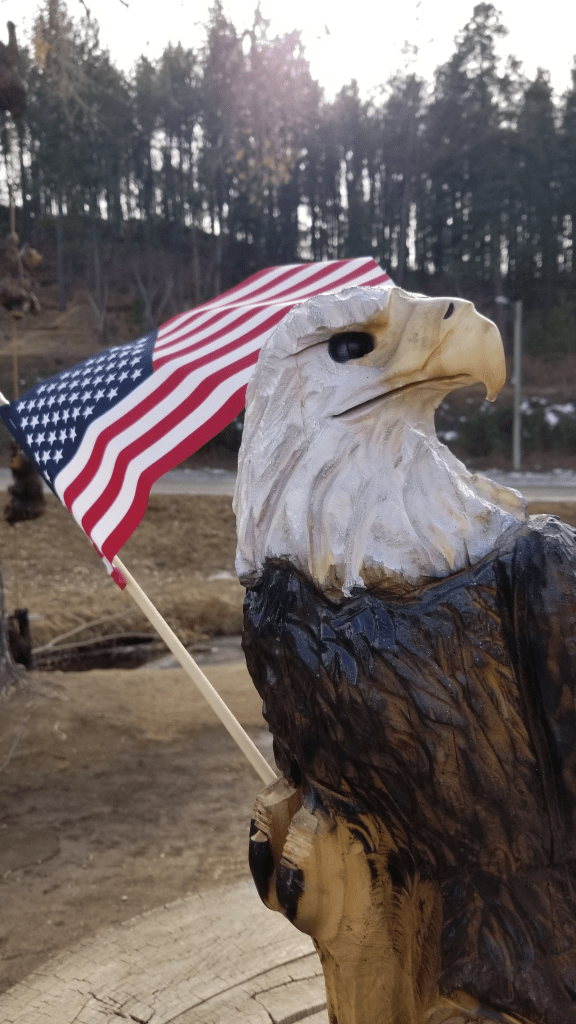
Date photographed: 10-Feb-22
A true spectacle of folk art and roadside entrepreneurship can be found at Dahl’s Chainsaw Art located a few miles north of Mount Rushmore in Keystone, South Dakota. Hundreds of carved eagles, bears, fish, deer, elk, bears, and birds adorn a split of land hugging a creek along the large s-curve south of town. Many of the carvings have been embellished with stain, paint, and American flags. The American flags appear to be free with any purchase, patriotism that fades with a few seasons in the sun. The duo of carving brothers have become locally famous for a rendition of Bigfoot, recognized by the Guinness Book of World Records.
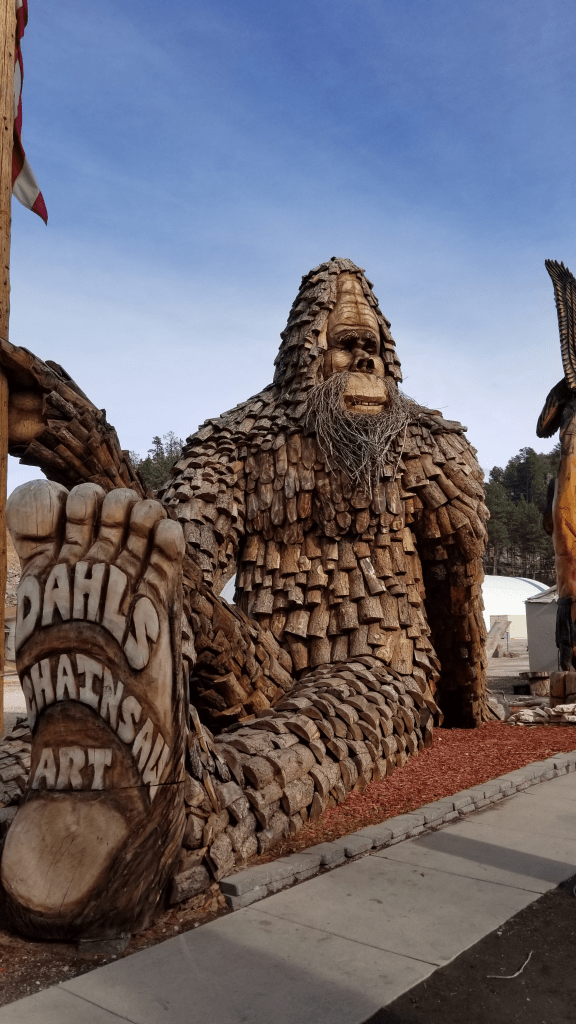
Date photographed: 10-Feb-22
The chainsaw carvings, while humorous, will not endure compared to the monument up the road. On the day of my visit, I was nearly alone on the drive from Rapid City to Keystone and at the monument, too. The hillside national monument certainly is breathtaking, the enormity not easy to explain. While incomplete against the original plans to include torsos and hands, the monument is preserved as substantially complete, a testament to the nation’s founding, expansion, progress, and preservation. The choice to stop carving was not a bad choice, with unintended consequences producing a national treasure. Of the four president’s depicted, I most enjoy tales of the rugged naturalist spirit, dominating will, and loyalty of Teddy Roosevelt. Fondly remembered in some circles for dedication to preserving the wild lands of America, he was not dedicated to protecting those he opposed. Fiercely loyal to William Howard Taft who would succeed Roosevelt as president, Roosevelt was not making an idle threat to Taft’s detractors with the promise to “break their necks with the utmost cheerfulness if you say the word!”. Roosevelt’s foreign policy to speak softly and carry a big stick did not apply to domestic matters. Instead, be loud and make threats. Perhaps Teddy realized that he needed the great outdoors as an outlet for aggression.

Date photographed: 10-Feb-22
Down the road from Mount Rushmore, is a substantially incomplete private memorial to Crazy Horse, the Oglala Lakota warrior. The vehicle entrance is multiple lanes, eerily similar to the parking attendant booths at large football stadiums or amusement parks. During my visit, I was the alone and the visit was free. Which seemed like the correct price for a 5 minute visit, particularly underwhelming compared to Mount Rushmore. The choice to not complete more features seems like a missed opportunity for a grand monument to native people, and an all too visible reminder of our incomplete presentation of native stories within our national history.
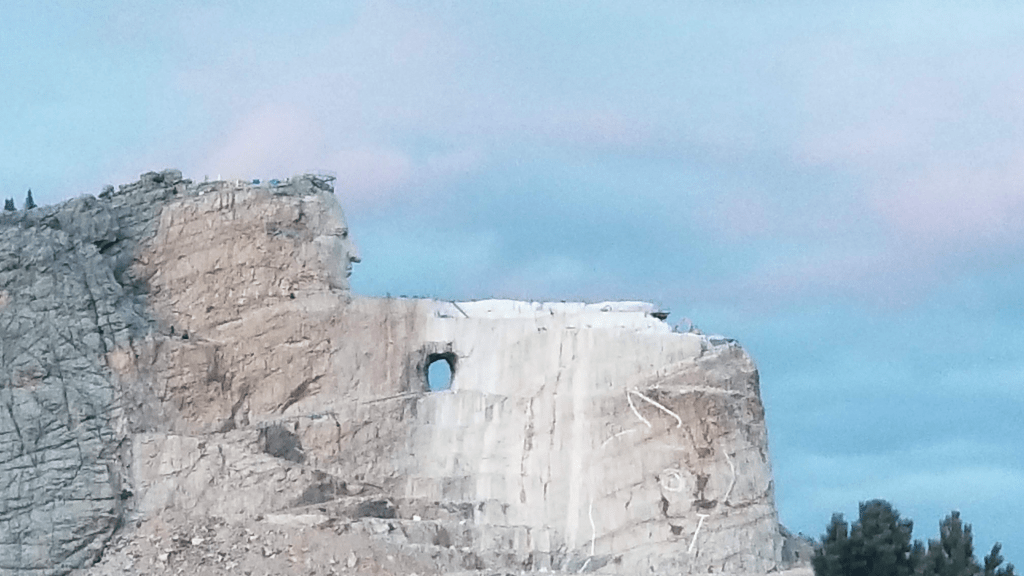
Date photographed: 10-Feb-22
The drive in the nearby hills contains hairpin turns revealing breathtaking views and quick glimpses of the memorials. As I drove around the Black Hills, I questioned why mountainside memorials aren’t more numerous, not just in America but around the world. Multiple cultures have valued the creation of enduring memorials and many seek to create enduring legacies and monuments to span generations. Cultures around the world have known how to carve rock for centuries, and innovation since World War 2 has delivered significant advances in the engineering of explosives and water jets to shape rock. It seems curious that industrial and political titans of recent ages erected skyscrapers with names on signs that can be removed rather than impose human will will onto large swaths of the natural landscape. The buildings may last 100 years, while a carving into a mountainside will last multiple centuries.
In America, despite setting aside land in national parks, we place very little value on the natural landscape, cutting through beauty with railroads, pipelines, interstate highways, and commercial interests of all sorts. The comfort and amusement of the masses demands no less. The egos seeking a legacy demand even more. Many of these desecrations are named in recognition of people or corporations that aided in the questionable use of public lands. In a nation of unfettered personal self promotion and pervasive capitalism, the mountainsides are worth preserving, free of memorials and commerce.
 DISCOVER THIS WORLD